 WORDROW Korean Idioms
 Kitchen and dining
Select a marker to zoom in and see related idioms. The number in each marker shows how many idioms are linked to that spot.
Handwriting books for this scene6 books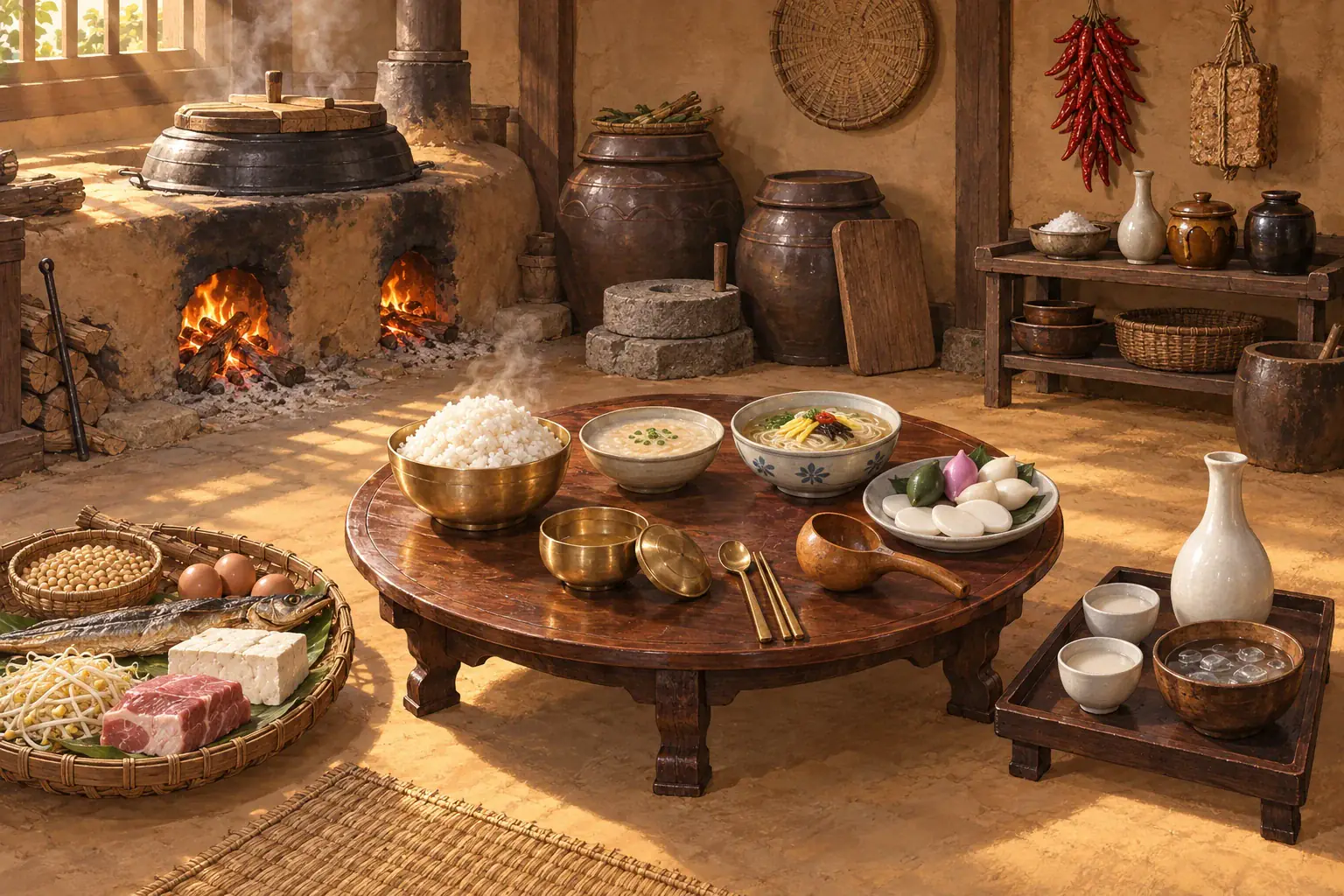
Where would you like to start?
Rice and meals
29 idioms Korean words
29 idioms
 Stop eating Be unable or unwilling to eat food
  Take pay without earning it Receive pay without doing required work or without doing it properly
  finally get a meal Euphemistically, to eat a meal after a long time without one.
  Grind grain into rice-sized pieces Grind mung beans, buckwheat, broom sorghum, or the like into pieces resembling rice grains.
  live under others’ disapproving eyes To live uneasily and without confidence, constantly watching how others react.
  pick out meticulously To pick things out meticulously from among many items.
  Pause before proceeding Figuratively, pause for a while without rushing in work or speech, to rest or allow time
  go without any meals To eat no rice or meals at all and go hungry.
  Finally get a meal Eat rice after a long interval.
  Do something habitually Do something often as a matter of course
  Be revolting Find another’s words, behavior, or the like unpleasant and repulsive
  Be comfortably off Be sufficiently well off that food is not a major concern.
  Die Vulgarly, have one’s life end
  keep oneself fed To sustain a reasonably adequate life without going hungry.
  Be reasonably well off Live in fairly comfortable financial circumstances
  Pick at one's food Eat little and pick at rice because of a poor appetite or the like.
  feel sickened with irritation To feel disgusted or offended.
  earn one’s food To obtain food or payment through a certain amount of effort.
  Wind a clock Wind a clock’s spring so it operates properly
  Get beaten Vulgarly, be beaten
  serve time in prison Colloquially, to live confined in prison.
  2 meanings Go completely without food Starve completely, unable to take even plain water.
  Be choosy despite hardship Act like someone well-fed despite being in difficult circumstances
  serve time in prison Colloquially, to live in prison.
  End up in prison Vulgarly, be imprisoned
  Serve time in prison Vulgarly, be imprisoned
  Send someone to prison Slang: send someone to prison to serve a sentence.
  Exaggerate A vulgar expression for exaggerating beyond the facts
  2 meanings Go one step further; anticipate another's plan Do something even more outrageous in a matter already somewhat wrong.
 No idioms at this spot match your search.
Rice Cake
10 idioms Korean words
10 idioms
 handle carelessly To handle something carelessly however one wishes.
  As easily as anything Readily and easily, as a matter of course
  Manipulate at will Handle something however one wishes
 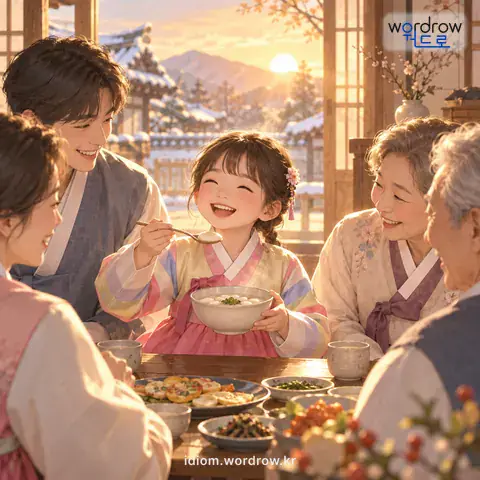 grow a year older at New Year To become a year older by celebrating the Lunar New Year.
  3 meanings Have plenty; fuck; ruin something Have a sufficient quantity or degree.
  be beaten to a pulp To suffer severe humiliation or be beaten severely.
  get an unexpected windfall To gain an unexpected benefit.
  Shape thin round pieces Make confections or rice cakes into thin, round pieces
 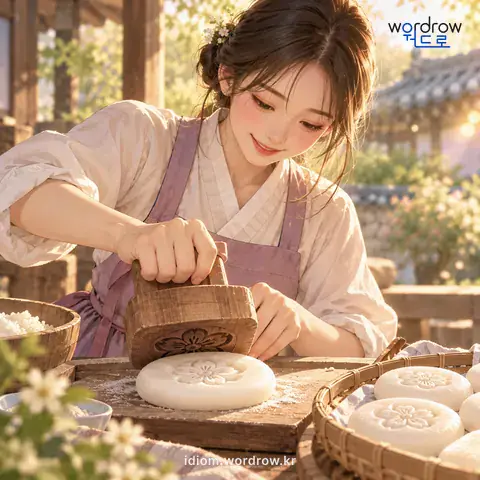 2 meanings stamp patterns or take special care To stamp patterns on white rice cakes or the like with a rice-cake mold.
  Look sulky Figuratively, describe looking angry or sulky.
 No idioms at this spot match your search.
Soup & Porridge
15 idioms Korean words
15 idioms
 Get no benefit whatsoever Receive no share or benefit at all.
  Get married Figuratively, hold a wedding, from the custom of serving noodles at wedding receptions.
  get married A figurative expression for holding a wedding, from the customary serving of noodles at wedding receptions.
  have water separate on top For moisture to remain separate on top instead of mixing with the food.
  3 meanings Fail or be rejected Figuratively, fail an examination.
  2 meanings Tear dumpling dough or skip stones Tear off small pieces of kneaded flour dough to put in boiling broth
  Fail badly Fail badly at something and suffer for it.
  Beat nearly to death Vulgarly, beat so severely as to leave someone half-dead.
  Seethe with anger Have anger, indignation, or similar feelings boil inside because one cannot contain them
  leave no visible dent A figurative expression for a case where removing a small amount leaves no trace.
  be well matched For two things or people to harmonize well.
  Become neither one thing nor another Be so halfway that one is neither this nor that.
  Make a mess of something Spoil or fail at an undertaking
  Whether it works out or not Regardless of whether things turn out properly.
  2 meanings Surpass utterly or overpower Be incomparably superior in cunning, talent, means, or the like
 No idioms at this spot match your search.
Drinks & Cups
21 idioms Korean words
21 idioms
 Taste bitter defeat Suffer a bitter experience such as defeat or failure
  Be tasteless Have no flavor at all
  throw cold water on things To obstruct something that is progressing smoothly so that it cannot proceed.
  Drink straight from the bottle Tilt a bottle to one's mouth like a trumpet and gulp down its contents.
  distill soju To heat fermented liquor and collect soju from a traditional distillation vessel.
  2 meanings Drink excessively Drink far too much alcohol
  Be overcome by drink Be very drunk.
  pour a drink To pour liquor into a cup.
  Be able to drink for a long time Have a large alcohol capacity and tend to keep drinking once one starts
  Be consumed by drink Be very drunk.
  drink more as one gets drunker To keep drinking more as one becomes more intoxicated.
  Have a drink Drink the liquor poured into a cup
  Share drinks Drink together.
  drain one’s glass To drink all the liquor poured into a cup.
  Taste bitter failure Suffer something painful such as failure or defeat
  Deal a bitter defeat Cause someone to experience something bitter, such as failure or defeat.
  Have a drink Drink the liquor poured into a drinking glass.
  offer a celebratory drink to a superior To pour liquor into a superior’s cup in a spirit of congratulation or wishes for long life.
  drain one’s cup To drink all the liquor poured into a cup.
  2 meanings Offer a cup of liquor Pour liquor into a cup and offer it during an ancestral rite
  throw cold water on something To intrude on something going well and spoil the mood or obstruct it through needless fault-finding.
 No idioms at this spot match your search.
Seasonings
30 idioms Korean words
30 idioms
 Have no clue about the matter Be unable even to guess the inside story of a matter
  Become seasoned through Have seasoning penetrate.
  Speak bitterly Words expressing dissatisfied bitterness
  be tempted To develop desire or interest.
  Be tempted Feel a desire to possess something
  Pique interest Make someone interested.
  Add fuel to the fire Incite emotions or actions and intensify them
  Fuel something further An emphatic expression for intensifying emotion or behavior by encouraging it.
  3 meanings exploit, crowd, or cry A figurative expression for owners of the means of production in a class society appropriating the fruits of labor without payment from direct producers who lack those means.
  grease someone’s palm Colloquially, to use bribes so that a matter is handled smoothly.
  Live in abundance Be prosperous and plentiful
  Taste for poison For a senior court lady to taste the king’s meals or medicinal decoctions first to check for poison
  Be delightfully affectionate Be extremely charmingly intimate and enjoyable
  Delight in another’s misfortune An expression of great satisfaction at another person’s misfortune
  leave a bitter aftertaste For the feeling left after something ends to be unpleasant.
  develop a taste for To come to like or enjoy something.
  Develop a taste for something Become drawn to something and take enjoyment in it
  Seem mentally off Slang: seem not to be in a normal mental state.
  come to enjoy something To come to like or enjoy something.
  Come to enjoy something Feel something is pleasing and enjoyable
  Cover every corner Figuratively, travel evenly through every place without missing any
  treat someone as ritually impure To treat something as though confronting ritual impurity.
  Sleep in bitter cold Sleep in extreme cold, such as in a very cold room
  2 meanings Grow pungent or feel nettled For chili peppers, tobacco, or the like to grow well and develop more pungent constituents
  Go screw yourself Vulgarly, said when subtly making trouble for or deceiving another person
  Screw someone over Slang: subtly torment or deceive someone.
  2 meanings Draw things out Vulgarly, speak at length
  Hide another's property as one's own Conceal someone else's property as though it were one's own.
  Be worn down by hardship Express having suffered so many difficulties as to become exhausted, from syrup remaining cloudy instead of cooling clear, failing to set into candy and causing hard work.
  Spoil a promising affair Obstruct an undertaking that is going well or about to do so, making it fail or lose momentum
 No idioms at this spot match your search.
Cooking Ingredients
20 idioms Korean words
20 idioms
 cut up a slaughtered animal To divide a slaughtered animal into parts such as the head and legs.
  much of a muchness An expression meaning that the items are much alike, with no significant difference in the end.
  Six of one, half a dozen of the other An expression saying that either option amounts to the same thing
  be frozen stiff To become severely chilled by the cold.
  2 meanings Be unequivocal Figuratively, reject a request utterly and decisively
  A red-faced person A teasing expression for someone whose face has reddened
  poach an egg To make a poached egg.
  Make two things clash Make two affairs overlap so that they fail to fit and conflict with each other
  Two things clash Have two matters overlap incompatibly and conflict with one another.
  Fumble a caught ball Vulgarly, drop a ball one has caught during ball play
  find an excellent solution To find a particularly good means or solution.
  2 meanings rattle like roasting beans A figurative expression for the noisy rattle of gunfire.
  2 meanings Jump in anger; crackle with gunfire Figuratively, describe jumping about in intense anger.
  jump about in fury A figurative expression for jumping about in extreme anger.
  2 meanings Be shattered or ruined Of an object, be completely broken.
  packed like bean sprouts A figurative expression for things standing densely together.
  Limp Figuratively, limp, from the motion of planting beans while advancing and covering and tamping soil with one foot
  Be utterly exhausted Become so exhausted that one’s strength is utterly limp
  consume recklessly A figurative expression for gobbling something without any sense that it is precious.
  Prepare raw slices Prepare raw fish or meat slices.
 No idioms at this spot match your search.
Tableware & Bowls
26 idioms Korean words
26 idioms
 manage the feast kitchen To take charge of the work of preparing food for a feast.
  be an unladylike woman An expression meaning that a woman is not demure.
  have the time be ripe For an opportunity to become fully ripe.
  Make a beginning Begin for the first time.
  put an end to the matter To stop what one was saying or doing.
  See what lies inside See the contents, results, or the like of something.
  2 meanings Be revealed or blow one’s top For the contents or outcome of something to be revealed
  nag one’s husband Chiefly, for a wife to complain and nag her husband severely because of difficulties in daily life.
  2 meanings Be overcharged or unfairly blamed Suffer an unfair loss by paying more than the real price for a fee or item
  Overcharge someone Make someone pay more than the actual price or fee, causing an unfair loss.
  become a beggar To become a beggar.
  Do nothing but eat Pass one's days doing nothing but eating.
  Die A vulgar expression for dying.
  make a modest living To live reasonably well because one’s circumstances are passable.
  Glance off the target rim For an arrow to strike the target’s rim and bounce away
  Beat around the bush Speak indirectly rather than plainly identifying the point.
  2 meanings beat around the bush To speak indirectly rather than identify something directly.
 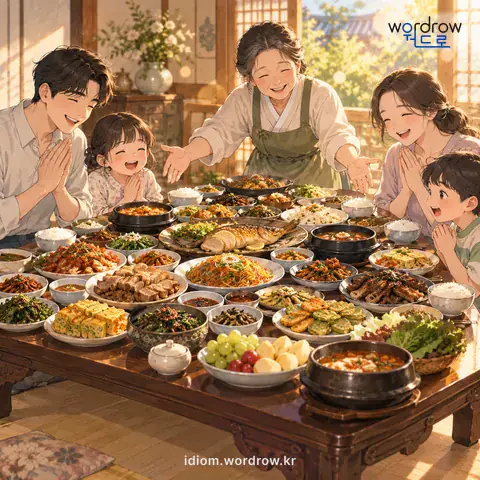 Serve a lavish feast Set a very large amount of food on a table.
  have a table laden with food For a table to be filled with food.
  Pass away A euphemistic expression for dying.
  begin eating A figurative expression for eating a meal.
  Have a clear, beautiful voice Figuratively, describe an exceptionally clear and beautiful voice
  Become utterly destitute Express extreme poverty with nothing owned, suggesting that all household possessions are gone and only a small begging bowl remains.
  ruin things To ruin an undertaking.
  Become a beggar Become a beggar
  develop a crack For an object to crack through breakage.
 No idioms at this spot match your search.
Kitchenware
15 idioms Korean words
15 idioms
 keep something good hidden away To conceal something good for oneself.
  come under criticism For something to become the object of criticism.
  Put under critical scrutiny Make something an issue and criticize or discuss it
  Be trapped with no escape Figuratively, a position from which one cannot escape a predicament
  Be as good as caught Be virtually already captured.
  Chime in in agreement Join in affirming another’s words or take their side
  sharpen a millstone’s grooves To chip worn teeth of a millstone or grain mill to make them sharp.
  2 meanings Wreck something or settle a quarrel Crush and ruin an object or spoil an undertaking
  Bob one’s head or body Nod one’s head or body as though pounding a mill
  Housewife Literally, someone who handles the rice pot; a vulgar expression for a housewife, the woman managing a household
  Sell liquor Work as a liquor seller
  Make someone sell liquor Make someone engage in selling liquor.
  Insert a straining basket Insert a cylindrical straining basket to draw off liquor or soy sauce
  be helplessly at another’s mercy An expression for helplessness, meaning meat placed on a chopping board.
  Wear a winnowing basket for bedwetting For a child who wet the bed to put a winnowing basket over their head and be punished by going about to ask for salt the next morning
 No idioms at this spot match your search.
Fireplace & Hearth
7 idioms Korean words
7 idioms
 2 meanings Smoke or have sex Vulgarly, smoke tobacco
  smoke a cigarette Slang for smoking tobacco.
  put up a smokescreen To use some means to conceal one’s true intentions cleverly.
  Ritual rice cake Formerly, rice cake used by shamans during rituals
  Come to nothing Of a task, thought, or the like, become entirely futile.
  spoil or obstruct To ruin or obstruct an undertaking, atmosphere, or the like.
  Have a booming voice Have a loud voice.
 No idioms at this spot match your search.