 WORDROW Korean Idioms
 Idioms under “ㄷ” — 329 idioms
Browse idioms by the initial consonant of the first Korean syllable, in Hangul order. On this site, ㄲ, ㄸ, ㅃ, ㅆ, and ㅉ are grouped under ㄱ, ㄷ, ㅂ, ㅅ, and ㅈ, respectively.
 Bind someone's hands behind their back Pull both hands behind the back and tie them.
  Be the one and only Be the only one.
  Listen indifferently Listen casually to another’s words as though they have nothing to do with oneself
  Well up and drip Of tears or the like, well up, gather into drops, and fall.
  Hear of it for the first time Express hearing something one has never heard before.
  never have heard or seen To know absolutely nothing because one has never heard or seen it.
  ruin everything To consume or destroy everything and bring it to an end.
  Have no room to breathe Be in circumstances that leave one unable to move or act freely
  3 meanings shake things up A figurative expression for a sound resonating so powerfully and noisily within an area that it seems to lift everything there and set it down again.
  a person relying on powerful backing A figurative expression for a person relying on another’s influence.
  bleed someone dry To exploit or manipulate someone and rob them of their wealth.
  Bleed someone dry For a prostitute to strip a womanizer of his wealth, or to make someone suffer greatly
  Extort someone's wealth Forcibly take another person's wealth by coaxing or threatening them.
  work oneself to the bone To find something so exhausting that it is hard to endure.
  Feel a chill down one’s spine Feel dizzy with fear and have one’s spine tremble
  Shared · 4 Feel a chill down one's spine Be so startled or afraid that goosebumps rise along one's spine.
  Torment harshly Badger or torment severely.
  be immobilized by difficulty To be unable to move at all because something is extremely uncomfortable or arduous.
  Fret intensely Be extremely distressed because things do not go as one wishes
  Have a stiff back Have back muscles so stiff that bending and straightening are uncomfortable.
  Pester relentlessly Annoy another person so much that they become fed up.
  Feel a sudden shock and tension Figuratively, describe feeling mentally stunned and extremely tense.
  fleece someone slyly To take another person’s wealth in a devious, cunning manner.
  rely on someone’s power To depend on another person’s influence.
  Turn one’s back Sever ties with and reject a person or group with whom one shared aims
  Push someone into acting Force or encourage someone to do something
  Extort another's property Threaten someone to take their property.
  Follow a ridge Follow a mountain ridge.
  be desperately impatient To feel intense anguish because things do not go as one wishes.
  2 meanings Get saddle sores or powerful backing For a cow, horse, or the like to have its back chafed raw by a saddle
  Mark text as correct When checking a text against another, mark its beginning with “△” to show it is correct.
  Shared · 4 Flatter someone Flatter someone to win their favor
  Shared · 2 Decisively Very firmly.
  Shared · 2 flatly Very decisively.
  Still be childish Literally, an infant’s cradle-cap scabs have not all fallen from the head; remain immature
  2 meanings have a hidden agenda or stash money away To have an ulterior motive or devise a secret plan.
  Shared · 3 The reason is simply There is no other reason.
  Be drenched in sweat Sweat extremely heavily
  2 meanings Cool off; take a brief rest Cool the body to stop sweating.
  Have a very hard time Be severely tried by an extremely difficult ordeal.
  put in hard work To put in considerable effort or labor.
  have a very hard time To find something extremely difficult or taxing.
  2 meanings Take root and thrive For a transplanted plant to root in new soil and become vigorous
  2 meanings fail to grasp even the basics To understand nothing at all.
  Threaten severely Threaten extremely harshly.
  Fall into disgrace Of honor, authority, or the like, be damaged beyond easy recovery.
  be infuriatingly unjust An expression for extreme resentment and anguish.
 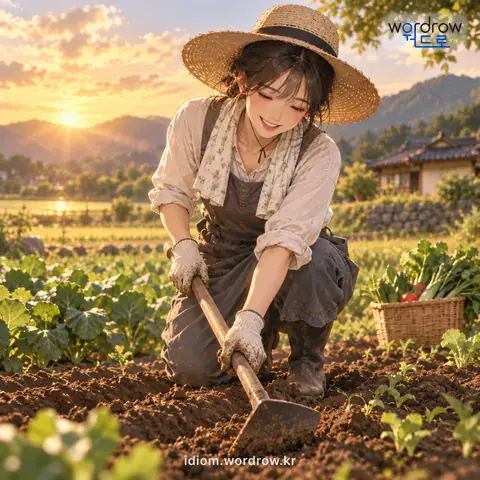 Farm the land Vulgarly, engage in farming
  With a deep, heavy sigh Extremely deeply and heavily, when sighing
  Dress oneself up Groom oneself and dress stylishly.
  a radiant beauty A figurative expression for a person’s radiant, beautiful appearance.
  A rising star Figuratively, someone newly emerging and distinguishing themselves in a field
  As easily as anything Readily and easily, as a matter of course
  Manipulate at will Handle something however one wishes
  grow a year older at New Year To become a year older by celebrating the Lunar New Year.
  be tenacious To have extraordinarily enduring, persistent nerve.
  Lose all heart Become discouraged and lose energy
  3 meanings Have plenty; fuck; ruin something Have a sufficient quantity or degree.
 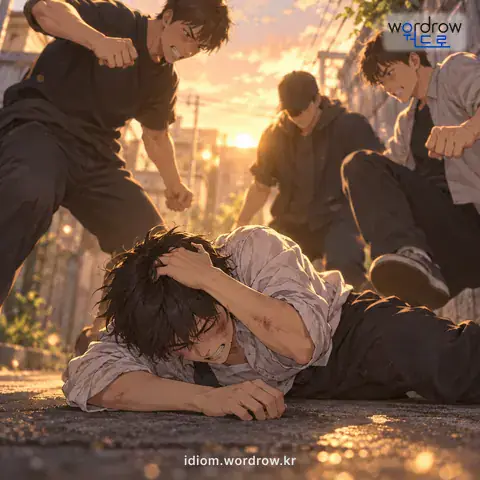 be beaten to a pulp To suffer severe humiliation or be beaten severely.
  get an unexpected windfall To gain an unexpected benefit.