 WORDROW Korean Idioms
 Idioms under “ㅋ” — 73 idioms
Browse idioms by the initial consonant of the first Korean syllable, in Hangul order. On this site, ㄲ, ㄸ, ㅃ, ㅆ, and ㅉ are grouped under ㄱ, ㄷ, ㅂ, ㅅ, and ㅈ, respectively.
 2 meanings sharpen one’s sword To prepare for fighting, aggression, or the like.
  Be struck by a blade Be attacked with a blade
  Riffle-shuffle hwatu cards Divide a hwatu deck roughly in half and mix it evenly so cards from both halves interleave.
  Take decisive corrective action Try to resolve defects, problems, or the like
  Wear a cangue For a prisoner to put their neck through the opening in a wooden cangue
  Put someone in a cangue Make a prisoner put their neck through the opening of a cangue.
  harbor murderous intent To harbor an intention to kill.
  Shared · 2 Hold the power Have actual authority over an undertaking
  Wield authority Use power.
  wield a sword skillfully To wield a sword skillfully.
  Act like a dignified man Act with the dignity befitting a grown man
  A nasal voice A sound resonating inside the nose because the nose is blocked
  A child's little savings A small amount of money belonging to a child.
  something very close Something very close by.
  An offering of food or a bribe Presenting a bribe or food
  boastful talk Words that put on airs.
  be held by a weakness To have one’s weakness seized upon.
  Lose face badly Suffer such humiliation or loss of spirit that one’s prestige plummets
  Be haughty Have an air of superiority and showing off.
  bow deeply To lower one’s head deeply.
  Until thoroughly drunk To the point of becoming extremely drunk
  Be downcast with worry Become dispirited and drained through worry
  Be stubborn Be obstinate and unwilling to listen to others.
  Feel proud and puffed up Become conceited over something to boast of.
  act conceitedly To put on airs and behave arrogantly.
  Never see even a glimpse Be unable to see someone at all because they never appear.
  not show one’s face To make no appearance at all.
  An insignificant morsel Figuratively, something so little that eating it makes scarcely any difference.
  Deflate someone's pride Crush someone's confidence.
  Cast on stitches In knitting, form loops with netting or knitting yarn.
  be rebuked or embarrassed To be embarrassed or scolded.
 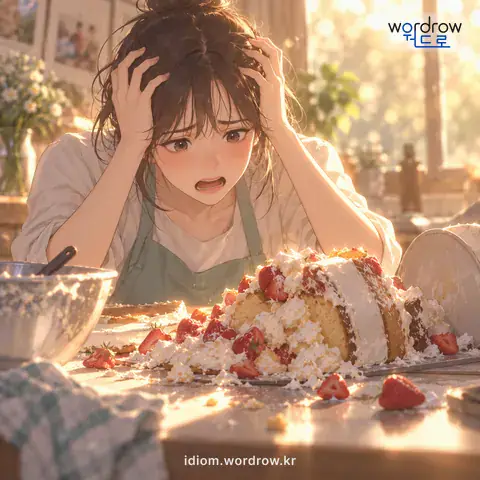 Spoil something Render something unusable or ruin an undertaking
  Be humbled with embarrassment Be unable to hold one's head up from embarrassment or rebuke.
  pick up stitches In knitting, to catch edge stitches of a cuff, hem, or the like with a needle.
  turn up one’s nose To put on airs and act puffed up.
  Fail to show one’s face Disparagingly, describe someone not appearing at all
  Not catch even a glimpse Disparagingly, express being unable to see someone at all because they never appear.
  Boast of something Display something as a source of pride.
  Sneer Look down on and ridicule another
  2 meanings Tickle someone's nose; irritate someone Put a wick into a nostril to stimulate it.
  Fret over things going wrong Feel troubled and anxious because things do not go as one wishes
  suffer losses To suffer damage or loss.
  Be haughty Have an attitude of showing off and acting superior.
  humble oneself To rein in one’s conceit or pride.
  seethe with frustration To be inwardly tormented because things do not go as intended.
  Be extremely stubborn Refuse to listen readily to others and be very obstinate
  Feel disgusted Feel extremely offended or disgusted.
  feel tears welling up To feel tears about to come from being moved or saddened.
  Snort dismissively Displeased or disgusted, barely acknowledge another’s words and offer no reply
  2 meanings be rebuffed Colloquially, to be scolded.
  struggle to suppress a mischievous laugh To find it hard to hold back laughter while pretending one has not tricked someone as a joke.
  2 meanings rattle like roasting beans A figurative expression for the noisy rattle of gunfire.
  2 meanings Shared · 2 Jump in anger; crackle with gunfire Figuratively, describe jumping about in intense anger.
  Shared · 2 jump about in fury A figurative expression for jumping about in extreme anger.
  2 meanings Be shattered or ruined Of an object, be completely broken.
  packed like bean sprouts A figurative expression for things standing densely together.
  Soybeans bloom For soybean flowers to bloom
  intercrop beans To use a hoe to plant beans sparsely between rows of barley, wheat, millet, or the like in early spring.
  Shared · 3 serve time in prison Colloquially, to live in prison.
  Shared · 3 End up in prison Vulgarly, be imprisoned