 WORDROW Korean Idioms
 Idioms under “ㅍ” — 85 idioms
Browse idioms by the initial consonant of the first Korean syllable, in Hangul order. On this site, ㄲ, ㄸ, ㅃ, ㅆ, and ㅉ are grouped under ㄱ, ㄷ, ㅂ, ㅅ, and ㅈ, respectively.
 Be utterly exhausted Become so exhausted that one’s strength is utterly limp
  A worthless, vulnerable life A life so insignificant that others can easily take it.
  beg rubbing one’s hands To plead while rubbing one’s hands together.
  Kill effortlessly Figuratively, the manner of killing and eliminating without effort
  Be faint and tiny Figuratively, be very faint and small, suggesting something as small as a fly's foot.
  Have no business Have little to do because business or an enterprise is doing poorly
  break up a household To give up the household one has maintained.
  step gingerly A figurative expression for moving one’s feet cautiously.
  An outsider to the matter A person with no connection to that affair.
  Take a gambling-house cut Organize a gambling game and take a portion from those who win money
  be all alike For things to have the same appearance or for exactly the same event to be repeated.
  A stock phrase Unchanging words with no new information.
  be stereotyped To be stale through repeating words and actions according to a fixed convention.
  Go through successive printings Reprint an already published book using the same printing plates
  Be near death in old age Be old and ill, almost at death.
  show off one’s biceps To expose one’s arms and boast of one’s strength.
  Shared · 3 Roll up one's sleeves Get ready to jump into a task and work actively.
  2 meanings Shared · 3 roll up one’s sleeves To prepare to plunge into a task and work actively.
  Shared · 3 Roll up one’s sleeves Prepare to plunge into something and work actively
  Shared · 3 Live an easy life Have no worries or concerns and live comfortably
  3 meanings Remarry; improve one's fortune or status Of a woman, remarry.
  be beyond one’s station To be unsuitable because it exceeds one’s station.
  Stand by idly Merely watch what happens without stepping forward to resolve it.
 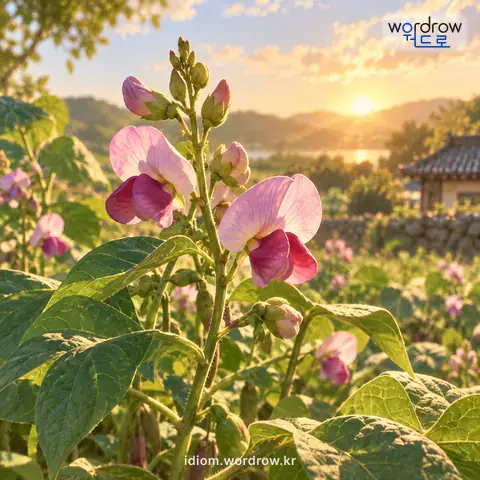 have red-bean plants flower For red-bean flowers to bloom.
  Interplant red beans In early spring, hoe between rows of barley or wheat and plant red beans sparsely.
  deal the game pieces To sort and distribute pieces or cards such as dominoes or flower cards.
  Finance a gambling game Become the financier or bankroll provider in a gambling game
  2 meanings Acquire a bad label; accept being singled out Acquire a nickname through something unfavorable.
  give someone a derogatory nickname To give someone a nickname based on something unfavorable.
  Write for a living Engage in the work of composing writing
  2 meanings entrust one’s life in marriage For a woman to marry.
  Shared · 4 Remember deeply An emphatic expression for firmly remembering something in one's heart so as not to forget.
  2 meanings Open fire or a verbal attack Fire cannons
  embezzle government goods To privately use up government-office property.
  2 meanings Get into position or strike a pose Adopt the posture or readiness to begin something
  Show off Deliberately display an air of pride and ostentation.
  Cast a vote Exercise voting rights by ballot.
  Be sincere and consistent Have one’s words and actions match one’s inner thoughts exactly
  Be two-faced Have words and actions differ from one's inner thoughts.
  Shared · 3 be trapped without escape A figurative expression for a predicament from which one cannot escape.
  Be stiff with starch For fabric to become stiff after being starched
  Lose stiffness Lose starchiness and cease to be stiff.
  repay labor in kind To provide labor to someone in return for labor received from them.
  Stop the day’s work midway Stop the work one was doing that day midway because of some circumstance
  consume recklessly A figurative expression for gobbling something without any sense that it is precious.
  Have music performed Cause music to be performed
  Have traditional music played Have traditional music announced or performed
  Ambition for greatness Figuratively, the hope to rise in the world and accomplish great things.
  have one’s blood surge A figurative expression for extreme agitation, meaning that blood gathers in the head.
  2 meanings Have one’s blood boil or be full of vigor Have feelings or emotions surge up
  Become a source of strength Be of great help
  Have intense drive Have very strong will or motivation.
  be tortured by worry To be extremely distressed or anxious.
  Feel the bond of blood Have a special affinity between blood-related family members
  2 meanings Be alive; be humanly connected Be alive.
  be utterly heartless To have no compassion whatsoever.
  Shared · 2 Exploit harshly Exploit or exact payments cruelly.
  Toil with blood and sweat Make efforts with all one’s strength and devotion
  Be put through hell Vulgarly, fall into extremely difficult circumstances and suffer badly
  Cause bloodshed Cause many casualties