 WORDROW Korean Idioms
 Idioms under “ㅅ” — 500 idioms
Browse idioms by the initial consonant of the first Korean syllable, in Hangul order. On this site, ㄲ, ㄸ, ㅃ, ㅆ, and ㅉ are grouped under ㄱ, ㄷ, ㅂ, ㅅ, and ㅈ, respectively.
 Be in immediate danger Be extremely endangered
  Lose track of time Fail to notice how time has passed because things move busily or one is absorbed in a task
  happen at any hour To be unrestricted by time.
  At all hours Frequently, regardless of the time.
  set a time limit To impose a time limit.
  Be close to death Be nearly dead
  enjoy prominent standing To hold a respectable, prominent position in one’s time.
  Match the going price For a price to match the current market price
  perform a rite for the dead For a shaman to perform a rite praying for the repose of a dead person.
  Shared · 2 Play innocent Pretend not to have done what one did or not to know what one knows
  Shared · 2 Play innocent Pretend not to have done something one did, or not to know something one knows.
  Act damned presumptuous Vulgarly, describe presumptuous and conceited behavior.
  be put to the test To become the object of a test.
  Shared · 2 With shameless ease The manner of doing something readily and very easily without inhibition
  Lose usefulness Lose effectiveness, usefulness, or the like.
  Shared · 2 as easily as eating cold porridge The manner of doing something readily and very easily, without hesitation.
  Pay careful attention Pay meticulous attention even to small matters
  Be oversensitive Be so meticulous and timid that even trivial things stimulate one.
  be thick-skinned To be so broad-minded that ordinary matters do not affect one.
  Be packed tightly together Figuratively, the manner of people sitting densely packed in a room
 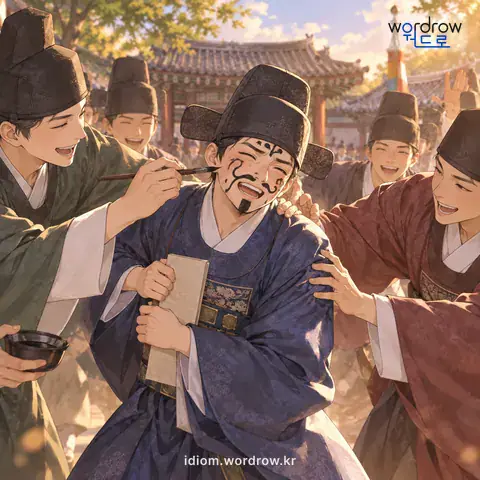 haze a successful examination candidate An expression for the old custom of seniors celebrating someone’s success in the state examination by drawing on their face with ink and tormenting them with orders to move forward and backward.
  Rush to greet someone The manner of acting in a frantic, distracted rush to greet a welcome person
  Be possessed by a deity For a deity to attach to a shaman, causing spiritual behavior
  Shared · 2 Pour out words without restraint Figuratively, say everything one wants to say without restraint
  shake violently A figurative expression describing trembling violently.
  Treat with reverent care Figuratively, the manner of handling or keeping something carefully and devotedly because one values it greatly
  Discover a new ore vein Discover another ore vein while mining an existing one.
  strike a profitable new vein To discover another ore vein while mining one and make a great profit.
  Over and over relentlessly Figuratively, pester persistently or repeat words at length
  find wild ginseng shoots To find shoots of wild ginseng.
  become spiteful To have one’s wish to treat someone well turn sour and behave spitefully.
  Be ill-natured Have a spiteful and bad heart
  Shared · 5 Speak one's mind openly State all the thoughts one has in mind.
  Start acting spitefully Begin behaving spitefully.
  Ignite people's enthusiasm Arouse people's feelings.
  Shared · 4 engrave deeply in one’s heart An emphatic expression for remembering something firmly in one’s heart so it is not forgotten.
  Pierce the heart For an event or words to become deeply engraved in and stir the heart
  Strike at the core Recognize and see through the essential point.
  have strong nerve To have good tolerance and strong nerve.
  Have one’s heart race Feel anxious or excited
  Be timid Be weak-willed and shy.
  be timid and small-minded To be fearful, lacking boldness, and small-minded.
  Be fearless and broad-minded Be fearless, bold, and generous in scope
  2 meanings Shared · 3 Be overwhelmed by pain or joy Have one's heart so full of sorrow or pain that it is hard to endure.
  Remain untroubled Have a calm disposition or nerve without signs of distress or anxiety
  Shared · 2 Stew in anger Fail to vent anger and brood alone
  bear a cross To take on grave guilt, hardship, or the like.
  learn to choose rhyming characters To begin learning classical Chinese poetry and only just learn how to choose rhyming characters.
  send away an unwelcome guest Figuratively, to drive away an unwelcome guest.
  Show no sign at all Show no trace whatsoever
  Shared · 2 Show no promise Show no chance or hope of success from the outset.
  2 meanings Nip something in the bud; notice a sign Block something new from the beginning or eliminate it entirely.
  Shared · 2 show no promise To show no possibility or hope of doing well from the outset.
  Throw ssangnyuk dice Throw the dice when playing ssangnyuk, a traditional backgammon-like game
  Carve paired concave grooves Slightly bevel the edges of a pillar, wooden vessel, or the like and carve concave grooves.
  Welcome enthusiastically Gladly support or welcome something
  Make two things clash Make two affairs overlap so that they fail to fit and conflict with each other
  Two things clash Have two matters overlap incompatibly and conflict with one another.
  Intervene forcefully Actively come forward to oppose or interfere in a matter
 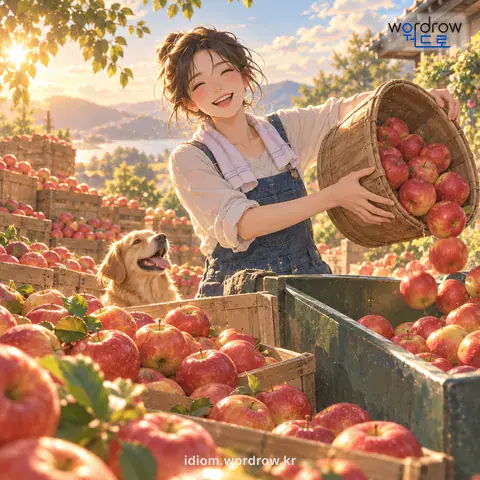 be plentiful For goods or the like to be so abundant that they pile up with enough left to throw away.