 WORDROW Korean Idioms
 Idioms under “ㄱ” — 699 idioms
Browse idioms by the initial consonant of the first Korean syllable, in Hangul order. On this site, ㄲ, ㄸ, ㅃ, ㅆ, and ㅉ are grouped under ㄱ, ㄷ, ㅂ, ㅅ, and ㅈ, respectively.
 Shared · 5 be wet behind the ears To be far from adulthood, or to be young.
  have the time be ripe For an opportunity to become fully ripe.
  Make a beginning Begin for the first time.
  Take proper shape For a form to take shape properly and appear
  Be unable to assert oneself Be so subdued by another's power or authority that one cannot assert oneself at all.
  2 meanings make no move or resistance To do no activity or work at all.
  Shared · 3 At breakneck speed Figuratively, the appearance of fleeing or running away extremely fast
  trail after someone To diligently follow someone closely in hope of benefit.
  Quietly back away Quietly evade and retreat
  Try to slip away Try to avoid something quietly or run away.
  Shared · 3 run like mad A figurative expression describing fleeing extremely quickly.
 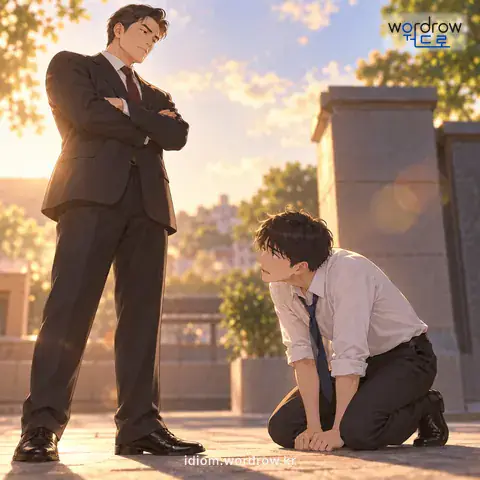 Shared · 2 Back down Have one’s spirit overcome by an opponent and retreat or shrink back
  have firm control To hold the initiative or control.
  keep something good hidden away To conceal something good for oneself.
  Get a knuckle rap on the head Be struck on the head with someone’s knuckles
  Shared · 2 Fall deeply asleep Fall deeply asleep.
  not even dream of it To be unable even to conceive of something.
  Never even dream of it Not think of something at all
  Dream big, absurdly so Sarcastically express that one's hope is too great to be realizable.
  Haunt one's dreams Appear in dreams because one cannot forget.
  never imagine even in a dream To be utterly unable to imagine something.
  Never have considered it Never have thought of something even once
  Give up unrealistic hopes Lower or abandon one's hopes.
  2 meanings wonder whether it is a dream An expression for being at a loss when faced with a completely unexpected event.
  be cowed To be unable to assert oneself, overawed by another person’s strength or authority.
  2 meanings Not budge Do no activity or work at all.
  remain unshaken To hold firm without moving or wavering in the slightest.
  provide a livelihood To provide someone with a way to make a living.
  Lose one’s means of support Have the means one depended on for a living cut off
  Find a means to get by Find a means to cling to and live on.
  Stand rooted to the spot Figuratively, the appearance of standing upright without moving at all
  2 meanings Shared · 2 Have a winning streak or strong clout In gambling or the like, have favorable scores come up repeatedly
  2 meanings Shared · 2 Have good luck or influence In gambling or the like, repeatedly receive good scores.
  Stretch endlessly Be so distant that the end cannot be seen.
  see something through To bring a task to completion.
  Be endless and bewildering For tasks to be so complex and numerous that one cannot find a clear thread
  An end is in sight Of a task or relationship, end.
  See something through Bring something to its end
  Take responsibility for what follows Take charge of the subsequent affairs.