 WORDROW Korean Idioms
 Idioms under “ㅁ” — 431 idioms
Browse idioms by the initial consonant of the first Korean syllable, in Hangul order. On this site, ㄲ, ㄸ, ㅃ, ㅆ, and ㅉ are grouped under ㄱ, ㄷ, ㅂ, ㅅ, and ㅈ, respectively.
 Gather and fall in drops Of tears or the like, well up, gather, and fall.
  handle matters decisively To handle matters firmly and thoroughly with clear judgment.
  Be precise and decisive For an affair or action to be clear in reason and without gaps
  2 meanings Be open-hearted or lax Have a disposition that does not nurse grudges
  without holding grudges Without a resentful or brooding disposition.
  Have a shrewd, firm character Have a precise, capable character with no loose ends.
  2 meanings Read someone's mind; lord it over someone See through another person's thoughts or actions.
  be quick-thinking To have clear, intelligent thinking or judgment.
  feel clear-headed To feel refreshed and mentally unburdened.
  2 meanings have rigid or dull thinking For one’s thinking or ideology to be stubborn.
  Shared · 4 Grow mature Come to think or judge like an adult
  Be enlightened Escape backward ideas
  Have a heavy head Feel unwell or have a dull headache.
  have much on one’s mind To have many worries.
  Shared · 4 Be empty-headed Have no judgment or insight
  Be strained by difficult work Feel mental strain because a task is complex or difficult.
 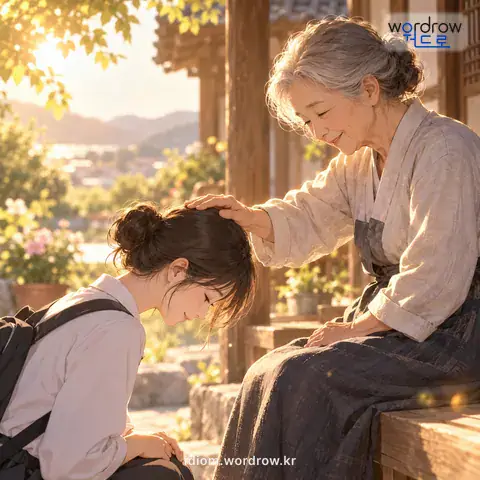 Shared · 2 feel compelled to bow in respect To feel respect arise.
  Have an outdated mind Have one's thinking or ideology become outdated and unusable.
  Think quickly on one's feet Readily devise thoughts or solutions on the spot.
  Be steeped in an idea Be imbued with an ideology, custom, or the like
  Shared · 4 begin thinking like an adult To come to think or judge like an adult.
  From head to toe An emphatic expression for the whole body
 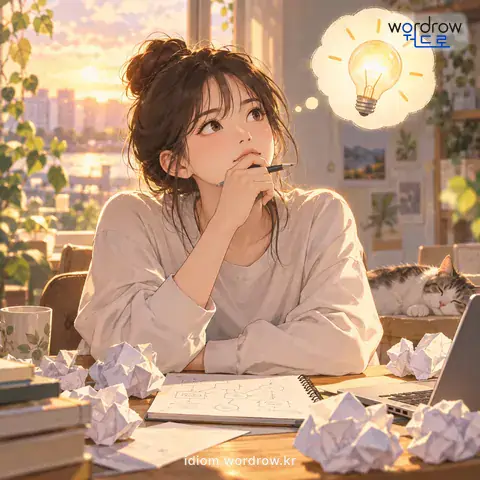 Shared · 2 Use one’s brains Use one’s mind to devise a solution
 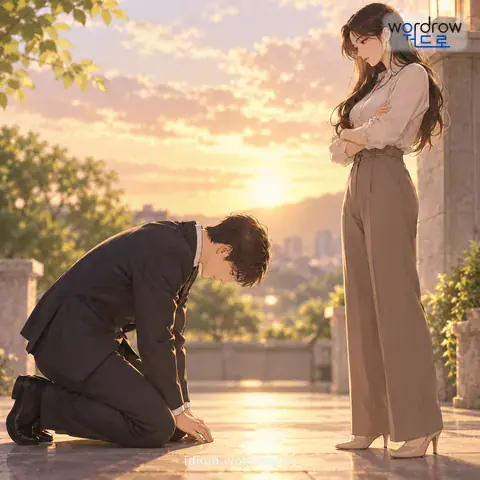 Shared · 2 Bow in submission Submit or display a deferential stance.
  scratch one’s head in embarrassment To scratch one’s head to ease awkwardness when one is shy or embarrassed and does not know what to do.
  2 meanings Become a monk or serve prison time Become a Buddhist monk
  Be forced into something Have something forced on one by another.
  put in an appearance To show oneself at a place.
  Shared · 2 Emerge from suppression For suppressed or hidden thoughts, forces, or the like to emerge outwardly
  Put one's heads together Face one another to discuss or decide something.
  2 meanings put one’s heads together To gather close together for an important discussion.
  Shared · 3 Feel deeply disappointed Be extremely disappointed or discouraged.
 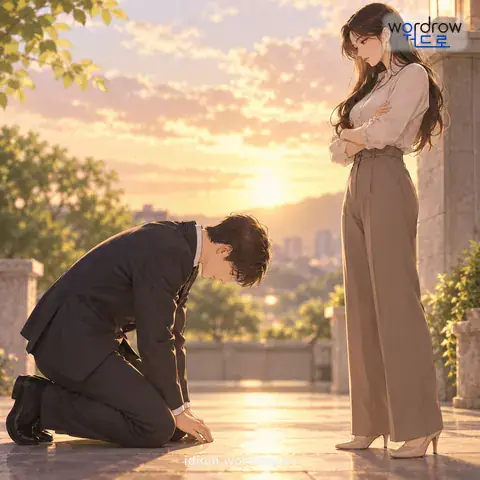 2 meanings Shared · 2 Bow in submission or respect Submit or show a humble attitude
  Clear one's head Calm an excited or tense mind.
  with all one’s strength With all one’s strength and heart.
  Make every effort Try with all one’s strength
  Shared · 2 rack one’s brains To agonize over something and become absorbed in thought.
  Think carefully Consider various aspects deeply or devise ideas.
 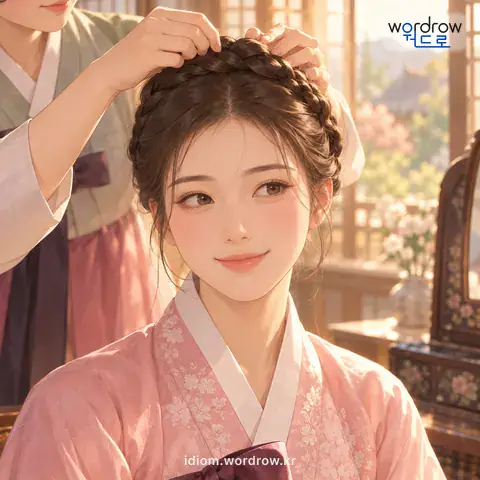 3 meanings Shared · 2 arrange hair up or enter married life To braid a woman’s long hair in two sections, cross them behind both ears, and coil them together above the forehead.
  2 meanings Initiate a courtesan or marry off a woman Have relations with a young courtesan and thereby put her hair up
 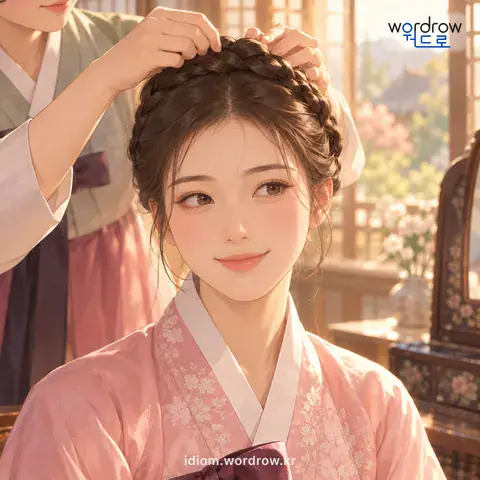 3 meanings Shared · 2 Put up one's hair; become a full gisaeng; marry Braid a woman's long hair in two, cross the braids behind the ears, and coil them together above the forehead.
  Rack one’s brains Think hard with extreme effort
  Weigh heavily on one's mind Receive a strong mental stimulus.
  Shared · 2 rear its head For suppressed or concealed thoughts, forces, or the like to appear openly.
 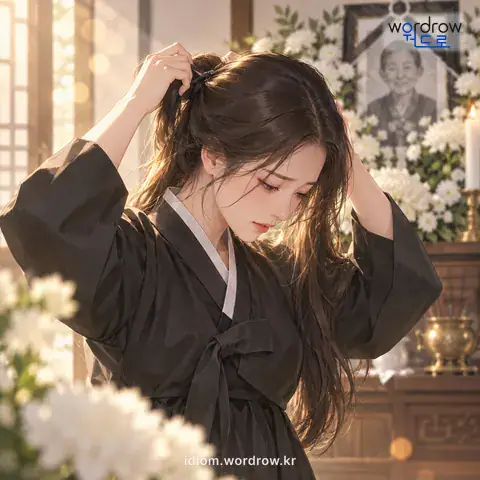 let one’s hair down in mourning To undo one’s coiled hair upon a bereavement.
  Shake one’s head in refusal Express strong rejection or shudder with aversion
  Strain every nerve Vulgarly, try with all one’s might
  Shared · 2 Fix firmly in memory Remember an object or fact firmly
  Keep circling in one's mind Have an unclear thought recur continually.
  Shared · 2 engrave in one’s memory To remember an object or fact firmly.
 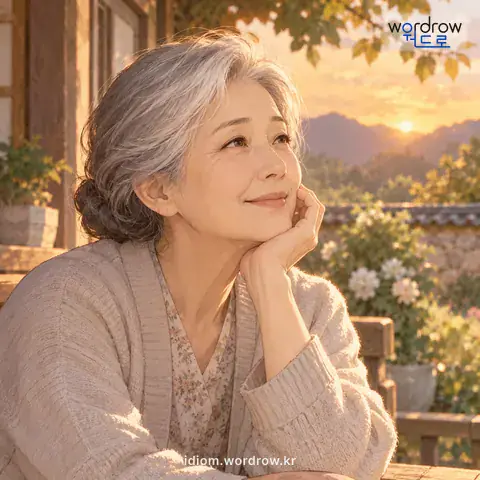 Grow gray or old Have one’s hair turn gray, or grow old
  Have one's mind seize up Lose motivation or thought in an unpleasant, frightening situation.
  Shared · 2 since one was born Since one came into the world.
  Shared · 5 Still be a mere child Still be far from adulthood, or be young
  Shared · 2 Have one’s hair stand on end Have one’s nerves tighten sharply through fear or surprise
  Shared · 2 Have one's hair stand on end Have nerves become acutely tense through fear or shock.
  Shared · 2 since one was born A disparaging expression meaning since one came into the world.
  rack one’s brains Colloquially, to suffer a headache over a troublesome matter.
  2 meanings Have a headache or troubled mind Vulgarly, have a headache
  Feel mentally unsettled Feel confused and unsettled.